Advanced Ultrasonic Technology for Better Water Quality
Ultrasonic water treatment offers an innovative approach to controlling algae and biofilm in ponds, lakes, reservoirs, irrigation water storage tanks, and other water systems.
Ultramins provides ultrasonic cavitation technology designed to help manage unwanted biological growth and improve water quality without relying exclusively on conventional chemical treatments.
Using high-frequency ultrasonic sound waves, specialized transmitters generate cavitation within the water. This process creates microscopic bubbles that grow and collapse, producing localized pressure changes that can disrupt algae and other microorganisms.
Whether you manage agricultural water storage, industrial basins, or large ponds, ultrasonic water treatment can provide an additional tool for managing algae and biofilm.
Ultrasonic Algae Control for Ponds, Lakes and Reservoirs
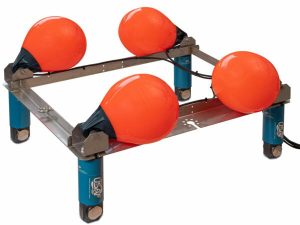
Algae growth can create significant water quality problems in agricultural, industrial, and municipal water systems. Excessive algae can contribute to:
- Poor water clarity and water quality.
- Clogged irrigation filters and equipment.
- Increased maintenance requirements.
- Unwanted biological growth in water storage facilities.
- Operational challenges in water treatment systems.
Our floating ultrasonic transmitters are designed to help control algae growth in ponds, lakes, reservoirs, and water basins.
The ultrasonic waves interfere with algae’s biological processes and can affect their buoyancy, encouraging affected algae to sink below the water surface.
Properly selected and positioned ultrasonic equipment can help manage algae over substantial water surface areas.
Ultrasonic Biofilm Control in Water Storage Systems
Biofilm is a layer of microorganisms that attaches to wet surfaces and develops within water systems. It can accumulate in:
- Agricultural irrigation storage tanks.
- Water reservoirs and basins.
- Leachate collection tanks.
- Industrial water storage systems.
- Water distribution and treatment infrastructure.
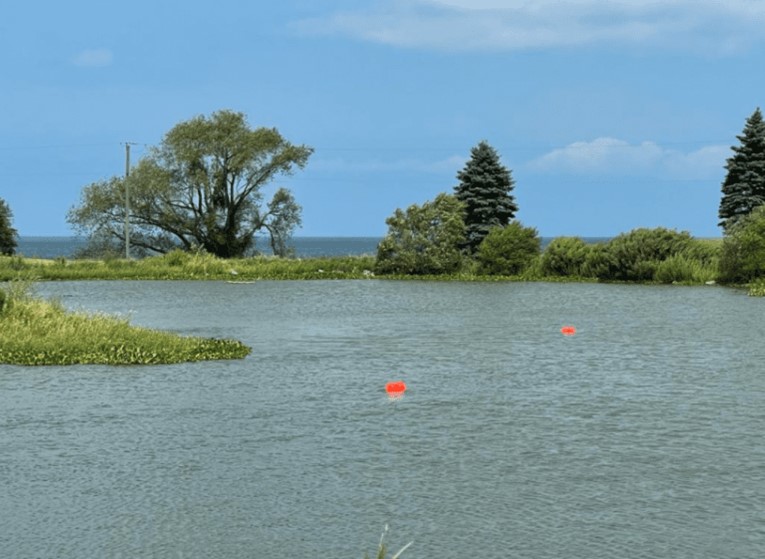
Ultramins offers ultrasonic transmitter configurations designed to help control biofilm development in water storage applications.
For larger applications, multiple transmitters can be installed to provide coverage across the treatment area.
A double-transmitter 100-watt configuration is used in certain applications, with reported treatment coverage of approximately 1,250–1,600 m², depending on site conditions.
How Does Ultrasonic Water Treatment Work?
Ultrasonic water treatment uses high-frequency sound waves transmitted into water. These sound waves generate a phenomenon known as acoustic cavitation.
Cavitation occurs when microscopic gas bubbles form, grow, and eventually collapse under the influence of ultrasonic energy. The collapse of these bubbles produces localized pressure and mechanical forces that can disrupt biological structures.
Understanding Ultrasonic Cavitation
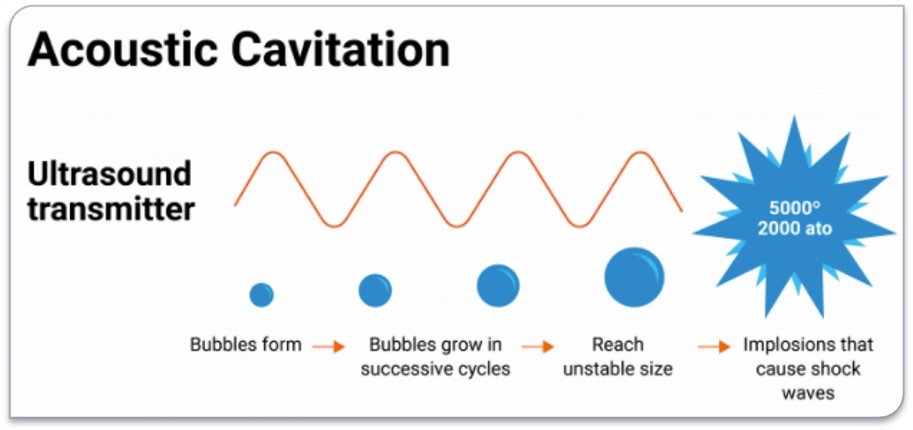
The process involves several stages:
- Ultrasonic transmitters generate high-frequency sound waves.
- Sound energy travels through the water.
- Microscopic cavitation bubbles form and expand.
- The bubbles collapse, producing localized pressure changes.
- These mechanical effects can disrupt susceptible microorganisms and biological growth.
The effectiveness of ultrasonic treatment depends on the equipment, frequency, power, water depth, system geometry, and the organisms being targeted.
Benefits of Ultrasonic Water Treatment
Ultrasonic technology provides an additional approach to managing biological growth in water systems. Potential advantages include:
- Algae management: Helps control unwanted algae growth in ponds and reservoirs.
- Biofilm management: Helps reduce biological buildup in suitable water storage applications.
- Reduced chemical dependency: May help reduce reliance on certain chemical treatment products.
- Continuous operation: Transmitters can operate continuously to provide ongoing treatment.
- Flexible installation: Multiple transmitters can be positioned according to water system requirements.
- Agricultural applications: Helps manage water quality in irrigation and greenhouse water storage systems.
Performance depends on site-specific water conditions and appropriate system design.
Ultrasonic Water Treatment Applications
Ultrasonic cavitation technology can be considered for a variety of water management applications.
Agricultural Water Systems
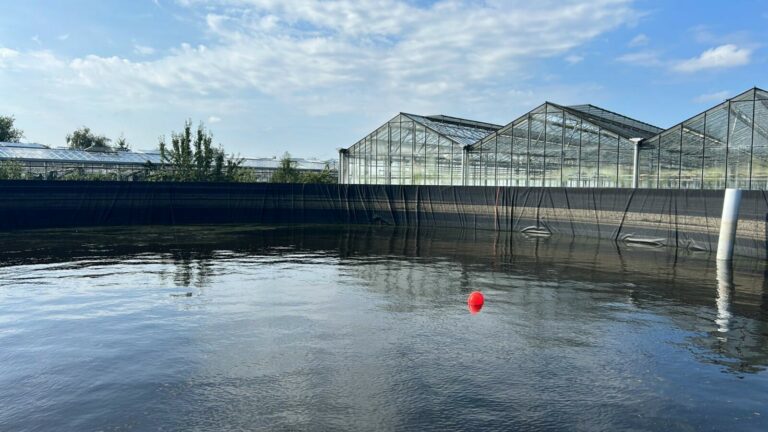
- Irrigation ponds and reservoirs.
- Greenhouse water storage tanks.
- Agricultural water basins.
- Leachate and stock water storage.
Industrial Water Systems
- Industrial water basins.
- Process water storage.
- Water reservoirs.
- Selected wastewater treatment applications.
Municipal and Environmental Applications
- Lakes and ponds.
- Water storage facilities.
- Reservoirs.
- Selected biological growth management applications.
Each installation should be evaluated according to water volume, depth, biological conditions, and treatment objectives.
Customer Experience: Fresh Venture Farms, Canada
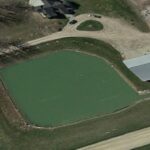
Fresh Venture Farms has used ultrasonic transmitters to manage algae and biofilm in its agricultural water systems. The farm initially installed two double-transmitter 100-watt units to treat a natural pond measuring approximately 2,200 m².
The pond had significant water clarity problems caused by clay particles and algae. According to the customer, visible algae problems were eliminated within approximately three weeks.
Following the initial results, the farm expanded the installation to include its leach tank and agricultural stock water storage tanks. The customer also reported a 20–25% reduction in annual hydrogen peroxide usage after implementing the treatment approach alongside its existing water management program.
The experience demonstrates how ultrasonic treatment may complement other water quality management practices in agricultural operations.
Frequently Asked Questions About Ultrasonic Water Treatment
What is ultrasonic water treatment?
Ultrasonic water treatment uses high-frequency sound waves to generate cavitation in water. The resulting mechanical effects can disrupt algae and other susceptible microorganisms and help manage biological growth.
Does ultrasonic water treatment control algae?
Yes. Specific ultrasonic systems are designed to interfere with algae growth and buoyancy. Effectiveness depends on algae species, water conditions, equipment selection, and installation.
Can ultrasonic treatment help control biofilm?
Ultrasonic treatment can help disrupt biofilm formation and biological growth in suitable water systems. Results depend on the system configuration and the characteristics of the biofilm.
Is ultrasonic water treatment chemical-free?
Ultrasonic treatment uses sound energy rather than requiring a chemical treatment agent to produce cavitation. It can be used as part of a broader water treatment program, potentially reducing the need for certain chemicals.
How large an area can an ultrasonic transmitter treat?
Coverage depends on transmitter power, frequency, water depth, basin geometry, and installation conditions. Hendin’s existing configurations include 60-watt and double 100-watt transmitters for different applications.
A site assessment is recommended to determine the appropriate number and positioning of transmitters.
How long does ultrasonic algae treatment take?
Treatment time varies with the algae species, water conditions, equipment configuration, and size of the water body. Customer experience at Fresh Venture Farms included significant improvement within approximately three weeks.
Can ultrasonic water treatment be used in agricultural irrigation systems?
Yes. Ultrasonic transmitters can be used in suitable agricultural water storage applications, including irrigation ponds, stock water tanks, and greenhouse water systems.
Improve Your Water Quality with Ultrasonic Treatment
Uncontrolled algae and biofilm can create ongoing challenges for agricultural, industrial, and municipal water systems.
We can help you explore ultrasonic water treatment technology for your specific water management requirements.
Contact Hendin Solutions to discuss ultrasonic algae control, biofilm management, and water treatment solutions.
